
Mar 13, 2026
How Long Does a Lift Last and When Should You Replace It?
How long should a home lift, platform lift, or commercial lift last in the UK? Platform Lift UK explains typical lift lifespans, the signs that a lift needs replacing, and what to do when yours reaches the end of its useful life.
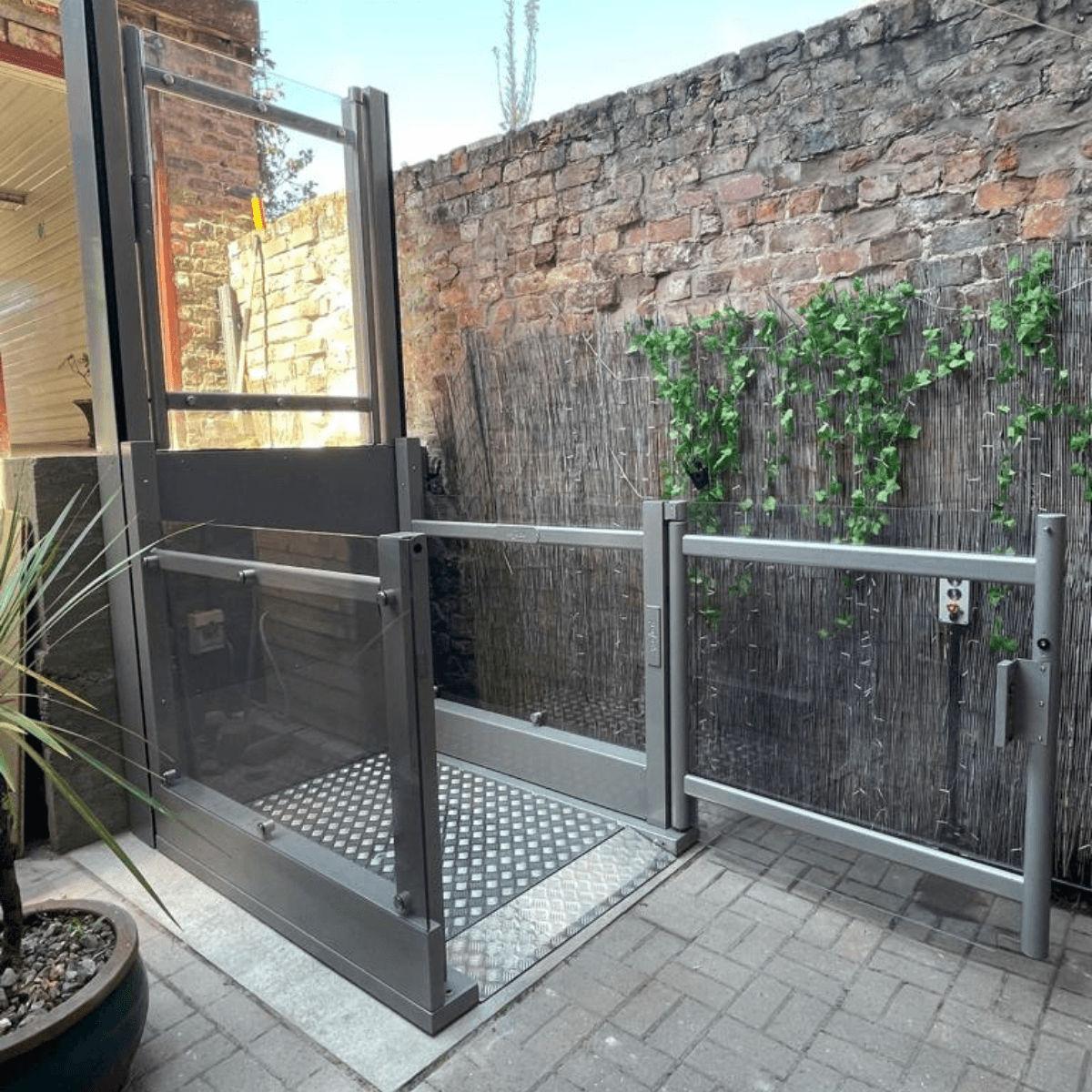
How Long Do Lifts Last — General Principles
There is no single definitive answer to how long a lift lasts because lifespan varies considerably by lift type, usage intensity, maintenance quality, and manufacturer. However, as a general guide for the UK market:
A well-maintained home lift installed by a reputable company and serviced annually should last between 20 and 25 years before major component replacement or full lift replacement is required. Some lifts significantly exceed this — particularly hydraulic home lifts and quality through-floor platform lifts where the core mechanical components are robust and spare parts remain available.
Commercial lifts — including cabin lifts, platform lifts, and goods lifts in commercial buildings — typically have a shorter effective lifespan than domestic lifts because they are used far more frequently. A commercial platform lift used dozens of times daily in an office or retail building may need significant refurbishment or replacement after 15 to 20 years. A similar lift used occasionally in a small commercial premises may last 25 years or more.
Step lifts and incline platform lifts tend to have slightly shorter lifespans than full home lifts or cabin lifts — typically 10 to 15 years for a well-maintained domestic step lift — because their exposed outdoor components and simpler drive mechanisms are subject to more wear and environmental stress than an enclosed indoor lift.
Dumb waiters, when properly maintained and not overloaded, typically last 15 to 20 years in commercial use and longer in domestic settings.
What Affects How Long a Lift Lasts?
Several factors have a significant influence on how long a lift remains in safe, reliable service.
Installation quality is the single most important factor. A lift installed correctly by a vetted, experienced company using quality components will outlast a poorly installed lift by many years. Incorrect installation creates stress on components from day one — accelerating wear and increasing the frequency of breakdowns. This is one of the primary reasons Platform Lift UK only refers customers to vetted installers.
Maintenance and servicing is the second most critical factor. A lift that receives regular annual servicing — or six-monthly LOLER inspections in commercial settings — will last significantly longer than one that is left to run without attention. Servicing identifies and addresses wear, lubrication needs, and developing faults before they become major failures. A lift that is never serviced may require major component replacement or full replacement years ahead of its expected lifespan.
Usage intensity plays a significant role in commercial settings. A platform lift used 50 times a day in a busy office building accumulates wear far faster than the same lift used five times a day in a small commercial premises. Manufacturers rate lifts for a certain number of starts per hour and cycles per day — exceeding these ratings consistently accelerates wear.
Environmental conditions affect outdoor lifts in particular. Step lifts, outdoor platform lifts, and external dumb waiters are exposed to rain, frost, UV, and temperature variation that accelerates corrosion and component degradation. A well-specified outdoor lift using stainless steel or powder-coated aluminium components will outlast a lift with standard steel components in the same outdoor environment by many years.
Spare parts availability becomes relevant as a lift ages. Some manufacturers discontinue parts for older models — meaning that when a critical component fails, it can no longer be replaced and the entire lift must be replaced. This is one of the practical reasons why lifts from established manufacturers with a long history of parts support tend to have a longer effective lifespan than lifts from less established suppliers.
Typical Lifespans by Lift Type
Home lifts — through-floor platform lifts Expected lifespan with annual servicing — 20 to 25 years. The drive mechanism, safety edges, and electrical components are the most commonly replaced items over the life of the lift. A mid-life refurbishment at around 10 to 12 years — replacing wear items and updating controls — can extend the effective lifespan significantly.
Home lifts — cabin and hydraulic lifts Expected lifespan with annual servicing — 20 to 30 years. Hydraulic systems are particularly durable when the fluid is changed regularly and the seals are maintained. Cabin home lifts from premium manufacturers can last 30 years or more with proper maintenance.
Step lifts — residential Expected lifespan with annual servicing — 10 to 15 years. Outdoor step lifts exposed to the elements have a shorter effective lifespan than indoor installations. The platform surface, safety edges, and drive mechanism are the most commonly replaced components.
Incline platform lifts — straight Expected lifespan with regular servicing — 10 to 15 years. The rail system and drive mechanism are robust, but the electronics and safety systems require regular attention to remain reliable over time.
Incline platform lifts — curved Expected lifespan with regular servicing — 12 to 18 years. Curved lifts are typically more robustly built than straight lifts because they are more expensive to manufacture — but the complexity of the curved rail means that rail replacement in later life can be a significant cost.
Commercial platform lifts Expected lifespan with six-monthly LOLER inspections and annual servicing — 15 to 20 years in high-use commercial settings, 20 to 25 years in lower-use environments.
Dumb waiter lifts Expected lifespan with annual servicing — 15 to 20 years in commercial use, 20 to 25 years in domestic settings.
Signs That a Lift Needs Replacing
Not all lift problems require replacement — many faults can be repaired at reasonable cost. However, there are specific signs that indicate a lift is approaching the end of its useful life and that replacement may be more cost-effective than continued repair.
Increasing frequency of breakdowns is the clearest indicator. A lift that breaks down once every few years is within normal parameters — a lift that is breaking down every few weeks or months is costing money in call-out fees and causing significant inconvenience. If repair bills are consistently high and faults are recurring rather than isolated, replacement is worth considering seriously.
Unavailability of spare parts is a definitive signal that replacement is necessary. When a manufacturer can no longer supply parts for a specific lift model, continued operation becomes increasingly difficult and eventually impossible. If your lift engineer advises that a critical component is no longer available, replacement is the only option.
Structural deterioration — visible corrosion on outdoor lifts, cracking or warping of cabin panels, or deterioration of the lift shaft or guide structure — indicates that the lift has reached the end of its serviceable life. Surface deterioration can sometimes be addressed cosmetically, but structural deterioration of core components is a signal that the lift needs replacing.
Failure of LOLER inspection is a legal trigger for action. If a LOLER inspection finds faults that render the lift unsafe and the cost of rectification approaches or exceeds the value of the lift, replacement is the most appropriate response.
Outdated safety standards applies to older lifts that were installed before current safety standards came into force. Lifts installed before certain dates may not meet current requirements for safety edges, door interlocks, overload sensors, or other features that are now mandatory. While existing lifts are not automatically required to be upgraded, a lift that cannot be brought up to current standards economically is a candidate for replacement.
Escalating energy consumption can indicate that a lift's drive system is becoming inefficient. Modern lifts are significantly more energy-efficient than models from 15 to 20 years ago — a lift that is consuming noticeably more electricity than it used to may be approaching the point where replacement with a modern, efficient model makes financial sense.
Repair vs Replace — How to Decide
The decision between repairing a lift and replacing it is rarely straightforward. The following questions can help frame the decision:
How old is the lift? If it is under 10 years old and has been well maintained, repair is almost always the right choice unless the fault is catastrophic. If it is over 20 years old and has had multiple significant repairs in recent years, replacement is worth serious consideration.
What is the cost of repair relative to replacement? As a general rule, if the cost of a single repair exceeds 30 to 40 percent of the cost of a new lift, replacement deserves careful evaluation — particularly if further repairs are likely in the near future.
Are spare parts still available? If yes and the lift is otherwise in reasonable condition, repair is viable. If not, replacement is inevitable and delaying it only prolongs the period of unreliable service.
What is the condition of the rest of the lift? If the component requiring repair is the only issue and the rest of the lift is in good condition, repair is the right choice. If multiple components are showing signs of age simultaneously, a major repair is likely to be the first of several — and replacement may be more economical in the medium term.
Has the lift's use or the user's needs changed? Sometimes a lift that was adequate when first installed no longer meets current requirements — for example, a user who has transitioned from a manual wheelchair to a powered wheelchair may find that an older lift cabin is now too small. In these cases, replacement with a more appropriate model may be the right decision regardless of the existing lift's age or condition.
What to Do When Your Lift Needs Replacing
If you have concluded that your lift needs replacing, the process is broadly similar to a new installation — with the addition of decommissioning and removal of the existing lift.
Most vetted lift installation companies will remove and decommission an existing lift as part of the installation of a new one. The cost of removal is typically included in the installation quotation, though this should be confirmed explicitly. In some cases, older lifts or their components can be recycled or refurbished for use in other applications — your installer will advise on the options.
When replacing a lift you have the opportunity to reassess your requirements. The lift type, size, and specification that was right 20 years ago may not be the best choice today. Platform Lift UK can provide independent advice on the most appropriate replacement lift type for your current needs and connect you with vetted companies covering your area for a free no-obligation survey and quotation.
Frequently Asked Questions
How do I know if my lift needs servicing or replacing? If your lift is breaking down frequently, producing unusual noises, or failing safety checks during a LOLER inspection, it needs attention. A qualified lift engineer can assess whether repair or replacement is the most appropriate response. Platform Lift UK can connect you with vetted engineers covering your area.
Can an old lift be upgraded rather than replaced? Sometimes — depending on the lift type and age. Control systems, safety edges, door mechanisms, and cabin interiors can often be upgraded or refurbished without replacing the entire lift. A lift engineer will advise on what is possible for your specific lift.
How long does lift replacement take? Lift replacement timescales depend on the lift type. A straight staircase platform lift or step lift replacement can typically be completed within a day once the new lift has been manufactured. Through-floor home lifts and cabin lifts typically take two to three days. The lead time from order to installation is typically four to twelve weeks depending on lift type and specification.
Is there financial help available for replacing a lift? The Disabled Facilities Grant may be available to fund lift replacement in some circumstances — particularly where the existing lift no longer meets the user's mobility needs. Your local council's housing team or an occupational therapist can advise on eligibility.
Who do I contact if my lift breaks down? If your lift has a maintenance contract in place, contact your service provider. If not, Platform Lift UK can connect you with vetted lift engineers covering your area for breakdown repairs and emergency callouts.
CLOSING SECTION
Platform Lift UK is an independent matching service. We do not install or service lifts ourselves. Our role is to connect homeowners and businesses across the UK with vetted lift specialists — whether you need a new installation, a replacement lift, a LOLER inspection, or an emergency repair.
If your lift is showing signs of age or you are unsure whether repair or replacement is the right decision, get in touch today. We will provide free, independent advice and connect you with the right specialist for your lift type, property, and location — at no cost to you and with no obligation to proceed.
