
Jul 24, 2025
Step Lifts UK — The Complete Guide for Homeowners and Businesses
Everything you need to know about step lifts in the UK — how they work, what they cost, who they are suitable for, and how to find a vetted installer. Free independent advice from Platform Lift UK.
What is a Step Lift?
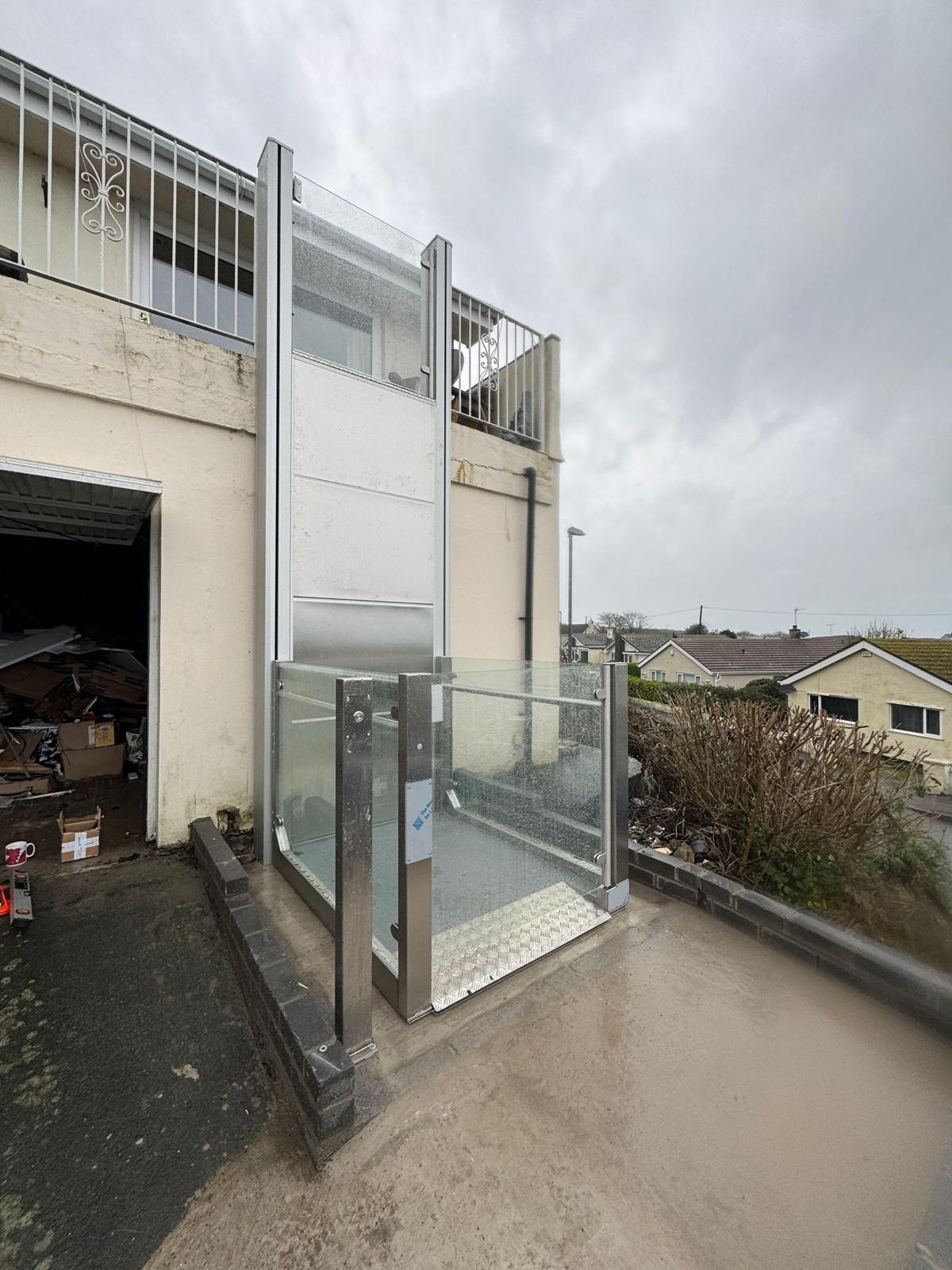
A step lift is a low-rise vertical platform lift designed specifically to overcome one or more steps. It travels straight up and down — typically between 200mm and 2000mm of vertical travel — and is compact enough to fit in spaces where a conventional ramp or full-height platform lift would not be practical.
Step lifts are used in both residential and commercial settings. At a domestic property they are most commonly fitted at the front or rear entrance where one or more steps prevent independent wheelchair or mobility access. In commercial settings they are used in offices, restaurants, shops, places of worship, schools, and any public building where a step or small level change creates an accessibility barrier.
Unlike a through-floor home lift or a cabin lift, a step lift does not need a shaft, a pit, or significant building work. Most step lift installations are completed within a day and require only a power supply and a flat surface for the platform to sit on.
How Does a Step Lift Work?
A step lift operates using a simple hydraulic or electromechanical drive system. The platform rises vertically from the lower level to the upper level and returns when called. The user — whether standing, seated in a wheelchair, or using a mobility scooter — boards the platform at ground level, operates the controls, and the platform rises smoothly to the upper level.
Safety features are built into every modern step lift as standard. These typically include pressure-sensitive edges that stop the lift immediately if an obstruction is detected beneath the platform, safety barriers or arms that prevent the user from rolling or stepping off the platform during travel, a non-slip chequer plate or textured platform surface, and battery backup that allows the lift to complete a journey or return to ground level in the event of a power failure.
Controls are straightforward — typically a simple push-button or joystick operation on the platform itself, with remote call stations at both levels allowing the lift to be summoned or sent by another person.
Types of Step Lift Available in the UK
Not all step lifts are the same. The right type for your property depends on how many steps need to be overcome, the available space, and whether the installation is indoors or outdoors.
Open step lifts are the most common and most affordable type. The platform is open on three sides with a folding or lowering barrier at the entry point. These are compact, straightforward to install, and suitable for both indoor and outdoor use. They are the standard choice for domestic properties with one to three entrance steps.
Enclosed step lifts have glazed or solid panels on two or three sides, providing a more enclosed environment for the user during travel. These are more commonly used in commercial settings where a more substantial installation is appropriate, or in outdoor environments where weather protection is beneficial.
Scissor step lifts use a scissor mechanism beneath the platform rather than a column drive. This gives a very low-profile installation when in the lowered position — useful where the platform needs to sit flush with the ground surface and there is no ability to accommodate a column at the side.
Indoor vs Outdoor Step Lifts
Step lifts are manufactured for both indoor and outdoor use, but the specification differs between the two environments.
Outdoor step lifts are built with weatherproof materials — typically stainless steel or powder-coated aluminium — and include drainage channels in the platform floor to prevent water pooling. They are designed to operate across the full UK temperature range and in sustained exposure to rain, frost, and UV. If you are installing a step lift at an external entrance, make sure the model specified is rated for outdoor use — not all step lifts are.
Indoor step lifts have fewer weatherproofing requirements and are generally more compact in profile, as they do not need to accommodate drainage or frost-resistant finishes. They are commonly used at internal split levels — for example between a kitchen and a dining area at different floor heights, or at the entrance to a room that sits slightly above or below the main floor level.
How Much Does a Step Lift Cost in the UK?
Step lift costs in the UK vary depending on the height of travel, the type of lift, whether the installation is indoor or outdoor, and the specific manufacturer and model. As a general guide:
A basic open step lift for a single domestic entrance step typically starts from around £2,500 to £3,500 installed. For two or three steps the cost rises to around £3,500 to £5,000 depending on the height of travel and model specified.
Enclosed step lifts and commercial-grade installations cost more — typically from £5,000 to £8,000 or above depending on the specification, any groundwork required, and the complexity of the installation.
VAT relief is available on step lifts purchased for the personal use of a person with a disability or chronic illness — the VAT exemption covers both the product and the installation. Your installer will confirm eligibility at the point of quote.
The Disabled Facilities Grant is also available through local councils and can fund step lift installations for eligible applicants. The grant is means-tested and your local council's housing team or an occupational therapist can advise on eligibility and the application process.
Do I Need Planning Permission for a Step Lift?
In most cases, planning permission is not required for a step lift installation at a residential property. The installation is generally classed as permitted development — a minor accessibility adaptation that does not require local authority approval.
There are exceptions. If your property is listed or sits within a conservation area, you may need listed building consent before any external works begin. Conservation officers are generally supportive of step lift installations because they are reversible and do not permanently alter the fabric of the building — but consent should always be sought before proceeding in these circumstances.
For commercial properties, Building Regulations approval may be required, particularly where the step lift is being installed to achieve Equality Act 2010 compliance or Part M of the Building Regulations. Your installer can advise on this and manage the application process on your behalf.
Step Lifts and the Equality Act 2010
For businesses, the Equality Act 2010 places a legal duty on service providers to make reasonable adjustments to remove barriers that prevent disabled people from accessing their services. A step or level change at a building entrance is one of the most commonly cited barriers — and a step lift is frequently the most practical solution where a ramp is not feasible due to space constraints or planning restrictions.
Step lifts are specifically recognised as an appropriate reasonable adjustment under the Equality Act and Part M of the Building Regulations. Installing a step lift at a commercial entrance is one of the most straightforward ways for a business to demonstrate its commitment to accessibility and meet its legal obligations without major structural works.
Step Lifts vs Ramps — Which is Better?
The most common alternative to a step lift is a ramp. Both provide step-free access but suit different situations, and the choice between them depends on several factors.
A ramp is generally the simpler and lower-cost option where there is sufficient space to accommodate it. However, a ramp requires a run of approximately 1200mm of horizontal length for every 100mm of vertical rise to achieve the gradient required for safe wheelchair use. On a 300mm step this means a ramp of at least 3.6 metres in length — which is impractical in many residential and commercial settings where space is limited.
A step lift overcomes any height in a compact vertical footprint and is the right choice when space is constrained, when the aesthetic impact of a ramp is undesirable, or when the step height is too great for a ramp of manageable length.
Frequently Asked Questions
Can a step lift be used outdoors? Yes — most step lifts are available in an outdoor-rated specification using weatherproof materials suitable for year-round use in the UK climate. Make sure the model specified is rated for outdoor use if you are installing at an external entrance.
How much space does a step lift take up? Most compact step lifts have a platform size of around 800mm x 1000mm to 900mm x 1200mm, with the drive column adding a small additional footprint to one side. When folded or in the lowered position the overall installation is typically under 400mm in depth from the wall or column face.
Can a step lift be installed in a listed building? Yes — step lifts are generally well-suited to listed buildings because they are reversible and do not require structural alterations. Listed building consent is typically required before installation, but conservation officers are generally supportive of step lifts as an accessibility solution for heritage buildings.
How long does a step lift installation take? Most step lift installations are completed within a day. The exact timescale depends on the height of travel, any groundwork or surface preparation required, and whether an electrical supply needs to be provided at the installation point.
What maintenance does a step lift need? Step lifts used in commercial settings require a LOLER inspection every six months. For domestic step lifts, an annual service is recommended to ensure the lift remains safe and reliable. Platform Lift UK can match you with engineers covering your area for both inspections and ongoing maintenance contracts.
How do I find a reliable step lift installer? Platform Lift UK connects you with vetted step lift specialists covering your area — free of charge, with no obligation to proceed. Get in touch to start the process.
CLOSING SECTION
Platform Lift UK is an independent matching service. We do not install lifts ourselves. Our role is to understand your requirements — lift type, property, height of travel, indoor or outdoor, location, and budget — and connect you with the right vetted installer from our network.
There is no cost to you for this service and no obligation to proceed with any company we recommend. If you are researching step lifts for a residential or commercial property, get in touch today for free independent advice and a no-obligation quote from a vetted installer covering your area.
